


Building on a Kingdom
Updated: Apr 10
BANKS MILL

FUNGI/MUSHROOM: Ganoderma applanatum aka Artist’s Conk.
HISTORY:
§ Opened in the 1860’s as one of Derby’s thriving silk mills before becoming home to Banks & Sons Ltd who manufactured tents, tarpaulins and leather goods. The building at the time was known as the “Elephant Works” before eventually …
§ 1999 University of Derby purchased the building and renovated it to become the existing Banks Mill Studios.
§ According to research Bridge Street was named for the original bridge that crossed the Markeaton Brook which linked the area to the town centre.
PERSONAL INSIGHTS:


Studying pictures available on the Banks Mill website I found it interesting to note that aside from the roof being changed and sky lights added the exterior of the building appears to have changed very little. It retains the 5 story height that due to a fire in 1910 the Silk Mill (Lombe’s Mill aka Museum of Making) lost when it was rebuilt so it gives a real insight into its history.
Researching deeper into the history of Bridge Street reveals a connection with slum areas in the city as well as a number of what could be called ‘darker issues’ such as an outbreak of typhoid fever with the source being a dairyman on the street or the odours caused by a soap manufacturers that caused a public health nuisance that involved Aldermen, residents and even the Derby Mercury! More positive ‘goings on’ include the factg that in 1891, according to derbydarkcorners.com the Derbyshire Hospital for Women was established at number 20 with the combined narratives painting a social picture of 19th century Bridge Street.
Museum of making

FUNGI/MUSHROOM: Coprinus comatus aka Shaggy Inkcap
HISTORY: one of a case of industrial Georgian industrial espionage!
§ Research shows that a gentleman named John Lombe left England on the orders of his brother, a local MP and somewhat wealthy man, to learn the secrets of the Italian silk industry/silk throwing The mission involved bribing an Italian priest to gain work as a machinery mechanic and according to Derby.ac.uk by night he drew the machines by candlelight before smuggling the drawings in a bale of silk back to England!
§ This was very much an economic interest due to the high price of a material held in such reverence by the wealthy elite and in particular society ladies.
§ Henceforth, Lombe’s Mill was built in 1721 and was the first of its kind for silk throwing in England before subsequently setting of a stream of other silk manufacturers due to the prevalence of streams and rivers in Derby and the surrounding area including that of Banks Mill.
§ John Lombe himself died at aged 29 and it is thought, or rumoured, to be due to poisoning on the orders of the King of Sardinia who ruled the area of Piedmont where Lombe had surreptitiously found work but not before he and his brother filed a patent for the Italian technology!
§ Derby University also reveals the Lombe’s Mill became the symbolic focus of the “first practical national example of the workers seeking to wrestle a degree of control from the mill owners” (Swan, J s.d.) with trade unions, having had national attention being brought to their cause, eventually being forced to back down.
§

In 1910 a fire decimated the building meaning that when it was rebuilt only the carrying and arches remain from its original structure and it being built two stories shorter.
§

FORMER DERBY REGISTER OFFICE

FUNGI/MUSHROOM: Coprinopsis lagopus aka Hare’s Foot Inkcap
HISTORY:
§ The Register Office occupied the former Royal Oak House building from 2005 to February 2026 (at about the time I took the photos for this project).
§ 50 years prior to the Register Office taking occupancy of the building housed the solicitors Flint, Bishop and Barnett.
§ Royal Oak House originally dates from 1732 but the current version, on the same site, dates from 1890. The original ROA was damaged by fire and replaced by James Eadie & Co with the landlord a year later apparently renting out upstairs windows so local people could see Queen Victoria when she visited the Market Place in 1891 (Hawley, 2026).
§ A coronation banquet for Queen Victoria took place in this premises and it also housed regular Masonic lodge meetings as well as flower shows due to its central position within the city centre.
§ Research further shows in 1886, as is the case in 2026, that along with two adjacent shops it was put up for sale due to being in poor position despite being “one of the oldest and most lucrative licensed houses in Derby” (Hawley, Z 2026).
§ Lovely little note on Hawley’s article for Derbyshire Live was how “Most English inns of this name, at least up until the end of the 19th century – used to hang out a branch of this tree on Oak Apple Day to commemorate the time that the future King Charles II hid in an oak tree to escape the Roundheads following the Battle of Worcester in 1651.” (Craven s.d. as cited in Hawley, 2026).
§ Research does reveal the demolition in 1948 of what had been the largest urban timer framed domestic residence in Britain - apparently if it had survived just a few more months it would have obtained Grade I listing during the year the first Statutory List for Derby was created (countryimagesmagazine.co.uk, 2014)This house was the Old Mayors Parlour at 15 Tenant Street which dated from 1483 potentially
§ The area around Tenant Street on which the Royal Oak Inn sits apparently prior to the Georgian period was used for medieval burgage plots which extended from the street front or market place with the front being used for business and with the rear including living quarters and gardens. Research informs met that these plots were rented either from a lord or king under leasehold arrangement and in the case of Derby they formed part of the market centre.

MARKET HALL

FUNGI/MUSHROOM: Leccinum sp. Aka Bolete
HISTORY
§ Opened in 1866 and is now a Grade II listed Victorian building.
§ Opened with a gala concert and a choir who sang a piece of music highly personal to me – the Messiah.
§ Designed by Rowland Mason Ordish costing £29000 – he also designed the dome of the Royal Albert Hall.
§ Ordish also worked on the roof of St Pancras Station with William Barlow – a single spanned design which bears a distinct similarity to that of the Market Hall (Hawley, 2023).
§ First undercover purpose-built market in the UK.
§ Used iron from a nearby foundry.
§ Renovations revealed a well 6 ft by 30 ft deep believed to serve older buildings prior to the Market Hall being built plus two time capsules dated 1864 and 1938.
§ Renovations costing £35 million not only restored the roof but also re-instated the original two entrances and a new grand central staircase which echoes that of the Victorian original.
§ Re-opened 2025 with new traders and individual stalls which are rented to local makers and creatives.
§ Prior to the Market Hall the area was a former trading area with the Market Place coming into existence around 1100 with an ancient trackway running along the south side of the market place. Discover Derby further states that in the “Corn Market grain was traded and at the top end of Friar Gate, farm animals were bought and sold along with produce. A market was also developed in the Morledge, where fairs were held.”

ST MARY’S CATHOLIC CHURCH

FUNGI/MUSHROOM: Exidia glandulosa aka Witches butter
HISTORY:
§ Church built to replace an older smaller church.
§ Opened 1839 – designed by Augustus Welby Northmore Pugin ,in the perpendicular Gothic style, who also designed the Houses of Parliament and ‘Big Ben’ Clock Tower. Pugin not only designed the exteriors of the buildings but also to all aspects of interior furnishings.
§ Foundation stone laid on Queen Victoria’s coronation day 28 June 1938.
§ According to St Mary’s website “She was his first church of importance, and benefitted from having a fledgling genius with a healthy budget and promoters as eager as he to restore to English Catholicism the beauty, dignity and glory of the parish church “of ancient days”.”
§ The only change to the church was the addition of the Lady Chapel in the 1850’s and was designed by Edward Welby Pugin, son of Augustus. The altar in the sanctuary was also replaced with a more ornate version.
§ The church is on a different axis to most Christian churches as they tend to face East-West but this church faces North-South and this is purely due to the narrow width of the site but with the bonus that on the Summer Solstice the sunlight shining through the windows lights up the altar at 12 noon.
§
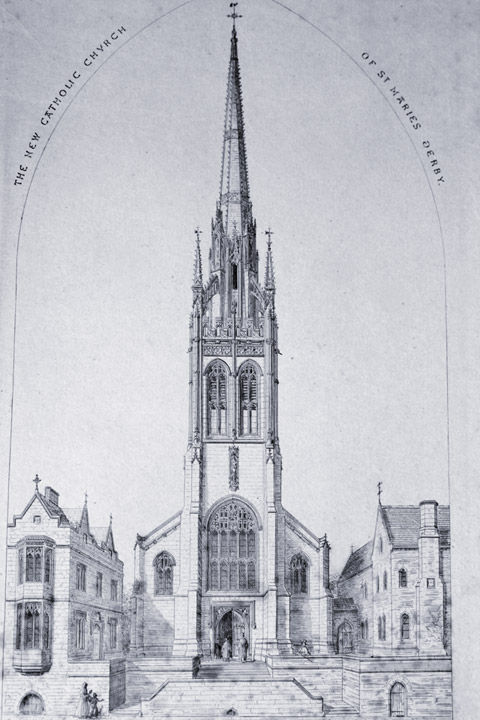
The original 100 foot spire that was planned was never completed due budget constraints.
§ St Mary’s website reveals how in 1860 lightning “lightning destroyed some of the pinnacles of the main tower and in 1907 another pinnacle crashed down on the church roof during a service and bounced onto the Rectory roof before hitting the flagstones below. Three years later the congregation was still paying off the debt caused by the repairs with special subscriptions, concerts and other entertainments”
§ The perpendicular style, noted above, which first emerged in around 1350 and is characterized on emphasis of vertical lines – this style was the third form of Gothic architecture.
GRAND THEATRE

FUNGI/MUSHROOM: Amanita Muscaria aka Fly Agaric
HISTORY:
§ Built in 1886 by Oliver Essex in the Italian renaissance style with a capacity for 2500.
§ First production ‘Rip Van Winkle’.
§ First proprietor – Mr Andrew Melville who was responsible for that first production and played the principle character as well as being the project, manager and author!
§ 1893 Frank Matcham, renowned theatre architect of the time, altered the auditorium and entrance to the theatre and although taking two months remarkably it remained open during the duration of works. The Babington Lane entrance is described as “has been much improved by the erection of an iron and coloured glass shelter over the front pavement to shield the carriage patrons from inclement weather, and the Babington vestibule has been made particularly attractive by the addition of new folding doors, with handsome coloured glass fixed at the entrance.” (Era, 1893 cited in arthurlloyd.co.uk, s.d.).
§ Altered again in 1900 by Matcham having had electricity installed in 1897.
§ Major fire shortly just 6 weeks after opening a fringe overhanging a wooden scene caught fire according to discover-derby.co.uk which killed two people leaving the building substantially damaged. The theatre was subsequently rebuilt bigger and apparently better than its first incarnation.
§

15 May 1924 – Bram Stoker’s Dracula starring Hamilton Deane first opened in the UK, and was in fact the world premiere, in the Grand Theatre before the play ‘A Man About the House, premiered in 1945 before it moved to the West End.
§ Lillie Langtry performed there albeit post King Edward VII and also Gracie Fields. Ivor Norvello is another name and also John Gielgud, Peggy Ashcroft and Vivian Leigh to name just a few – but also Max Bygraves,Vera Lynn Frankie Howerd … if a building could only talk this one would have some tales to tell!
§ Building later became a ballroom, nightclub and now is a Chinese restaurant.
§ Babington Lane named after the Babington family who lived at Babington Hall (a blue plaque marks the site) in the 16th century. The family hosted one Mary Queen of Scots in 1585.
§ Babington House was one of two in the area the other being Abbot’s Hill House. Area developed from residential parkland into commercial property in the 19th century.

COLLEGE OF ART

FUNGI/MUSHROOM: Clitocybe nebularis aka Cloud Funnel
HISTORY:
§ Derby School of Art founded 1853 before becoming the Derby Central School of Art and Science in 1870.
§ Built in 1876 in the Gothic style with Arts and crafts elements – designed by FW Waller of Waller & Son, Gloucester and Thomas C Simmonds who became the first principal and the former teacher of Waller.
§ Built using pink granite from Matlock.
§ Extended by Waller in 1896.
§ 1892 became Derby Municipal Technical College
§ 1928 – Technical College split and Derby School of Art established once more.
§ 1955 becomes Derby and District College of Art before becoming absorbed into the University of Derby.
§ Grade II listed status.
§ Hosted an art house cinema ‘The Metro’ from 1981-2006 before the purpose built Quad opened in 2008.
§ Dis-used until December 2012 as theatre rehearsal space but current usage is not known except for being a University of Derby annex.
Due to an almost frustrating lack of documentation I will be researching this building further as its mix of Gothic and Arts and Crafts stylistic elements intrigues me particularly due it being an art college. I will update the blog accordingly.
§ Green Lane, on which the School of Art stands was a primary ancient route between Derby and Burton-on-Trent as evidenced by a Mile Post.
§ Recorded 1577 as Newland Lane and by 1610 housing development had began and included Abbots Hill House mentioned above and Greenhill House – apparently the latter was built in the late 1600’s but “ by 1829 it had been substantially rebuilt and had been converted into Derby's first Lunatic Asylum, a privately run institution overseen by Thomas Fisher. It seems that in setting up this institution the owner sold off a large part of the pleasure grounds and these were converted into allotments to feed the growing population of the town. These, however, had been lost to developers within 20-30 years and are now covered by the surrounding streets.” (derbyinpictures.net, s.d.)

DERBY GUILDHALL

FUNGI/MUSHROOM: Oudemansiella mucida aka Porcelain fungus
HISTORY:
§ Built 1828, in the Classical style, as Derby’s Town Hall and served both as the Council Chamber and Court of Sessions.
§ Designer – Matthew Habershon.
§ 1841 severely damaged by fire leaving only centre and outer walls standing.
§ Rebuilt by Henry Duesbury in 1842. Portico replaced with the clock tower seen today and topped with a cupola and weather vane.
§ Hosted Queen Victoria in 1891.
§ During 19th centure tunnels built to allow prisoners to be escorted from the police station In Lock up Yard to the courts (assizes) taking place in the Guildhall.
§ Early stages of Alice Wheeldon’s trial, an anti-war campaigner took place in the Guildhall – blue plaque at her home in Pear Tree Road commemorates her life.
§ Became a theatre in 1975.
§ According to research a moot hall was established in the area of the Market Place in 1204.
§ Second incarnation was a timber and plaster guildhall built in 1500
§ … which was replaced by a further version in 1730, by Richard Jackson again in the classical style with a turret clock designed by John Whitehurst in 1737.
§ The Habershon version, the fourth incarnation, was built slightly to the south of the earlier structures.
§ Grade II listed building currently undergoing extensive restoration having closed in January 2019 due to safety concerns. Planned reopening Iis Christmas 2027.

PEPPERPOTS

FUNGI/MUSHROOM: Morchella esculenta aka Morels
HISTORY:
§ Originally built as part of the Derbyshire Royal Infirmary with foundation stone laid by Queen Victoria on 21 May 1891 when it was granted ‘Royal’ status.
§ DRI, designed by Young and Hall, opened in 1894.
§ Original Derbyshire General Infirmary built in 1804-1810 on what was then known as Bradhsaw Hay – now London Road. Original building had a fireproof design by William Strutt.
§ Area known as Castlefield …. See below.
§ Influenced by Florence Nightingale in terms of design and hygiene and built following a typhoid outbreak which was blamed on the old buildings but there is also the typhoid outbreak in Derby of 1884 which was blamed on the dairyman on Bridge Street.
§ Closed in 2009 when the new Royal Derby Hospital was opened and with the exemption of the pepper pot towers some of the remaining buildings remain as the Florence Nightingale Community Hospital.
§ North Pepperpot (I am seeing them both in lower-case, with capital ‘P’s’ or hyphenated) being transformed into a restaurant in 2024 and Pepper Pot South being transformed into a gym for residents of the Nightingale Quarter development which has redeveloped the DRI site into modern homes.
§
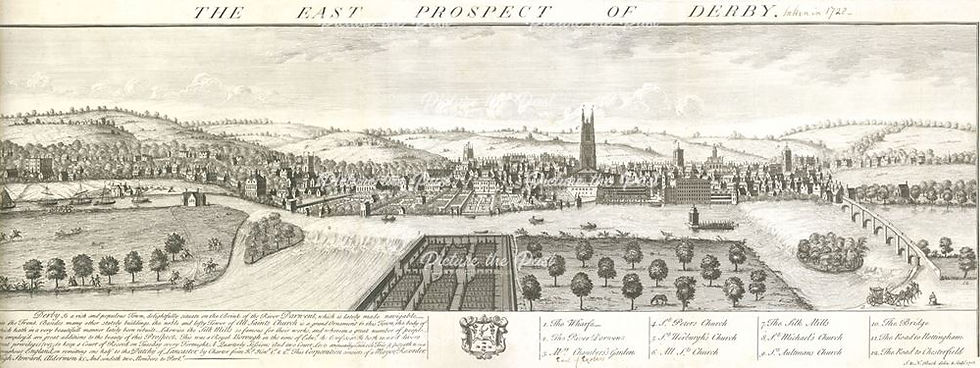
Figure 11East prospect of Derby, 1728. Copyright@ picturethepast.org.uk
§ Now for the interesting bit ….. the area is now known as Castleward which is derived from Castlefields – the ancient name of the area and a lost house. There is circumstantial evidence that suggests Derby did have a castle due to a bank and ditch being where Albion Street now is. No documents exist referencing this but the placename remaining does give rise to the suggestion. Castlefields itself lay to the south of Cockpit Hill where cock fighting took place and where potentially the castle’s motte was.
§ Castlefields house was off a Baroque style and built or existed around 1713 – and consisted of a deer park. Evidence is suggestive of the designer being Francis Smith of Warwick who also designed Kedleston Hall and at the time was designing the Guildhall.
§ By 1836 the house was empty and with the railway station only a couple of hundred yards away John Copeland, the current owner, took the decision to demolish it in around 1839-40.
§ Countryimagesmagazine.co.uk has the fuller story of the house but as they state “ in the 1830s, there was little to stop the march of smoke-belching industry” of the industrial revolution.

DERBY CENTRAL LIBRARY

FUNGI/MUSHROOM: Coprinellus micaceus
HISTORY:
§ Opened in 1879 alongside the Museum and Art Gallery as a gift from MP Michael Thomas Bass. Shops and streets were closed and decorated with garlands to celebrate its opening.
§ Designed in Domestic Flemish Gothic Style by Richard Knill Freeman.
§ Opened following the Public Libraries Act.
§ Children’s department opened in 1895 and open shelf access in 1912.
§ Grade II listed.
§ Second librarian Mr Harry Allpass accused of falsifying accounts and warrant put out for his arrest meaning Mr William Crowther appointed in 1885.
§ 1923 reopening of the library with the new Decimal Dewey system.
§ 1916 Carnegie branch libraries in Peartree and Alvaston – both partially requistioned for the war effort in 1916. These were the first ones that set the wheels in motion for further branch libraries across the district – which in recent years have seen many closures.
§ 1986-87 closure and reopened after £170,000 facelift.
§ 2018 closure due to Riverside Library being opened at the Council House ending 139 years of service.
§ Current usage for performance and events – research, at the point of writing is not indicative of further plans beyond a broad plan for development but nothing specified.
§ The Wardwick area itself originated as a Saxon dairy farm (Walda’s Wick) before becoming an elegant residential location in the Georgian and Victorian eras.
§ Another lost house is that of Lockett’s House, Wardwick as it was replaced by the Museum in 1879 and the subsequent library. The house was demolished in 1877.

PHOTO CREDITS:
With grateful thanks to the following for usage of photos taken for reference, as a back up to my own, for either fungi or buildings:
Tyler John Franklin
Clive Jones
Abbie Sunter
BIBLIOGRAPHY:
‘1,374 Silk Mill Stock Photos, High-Res Pictures, and Images - Getty Images’. Accessed 4 April 2026. https://www.gettyimages.co.uk/photos/silk-mill.
‘A Burgage Plot Refers to a Specific Type of... - MedievalHistoria | Facebook’. Accessed 10 April 2026. https://www.facebook.com/100092300625235/posts/a-burgage-plot-refers-to-a-specific-type-of-land-tenure-that-was-prevalent-in-me/503224239430926/.
‘About – Banks Mill Studios – Made for Success’. Banks Mill Studios, n.d. Accessed 10 April 2026. https://www.banksmill.co.uk/about/.
‘Alms Houses’. Accessed 11 February 2026. https://derbyinpictures.net/alms-house.
Artwork, Cubism. ‘Analytical Cubism and Analyzed Architecture’. Cubism Artwork, 16 September 2023. https://www.cubismartwork.com/analytical-cubism/analyzed-architecture/.
BBC News. ‘Derby’s Historic “pepper Pots” Building Brought Back to Life’. Derby. 16 February 2024. https://www.bbc.co.uk/news/uk-england-derbyshire-68307283.
BBC News. ‘Victorian Derby Market Hall Celebrates 150 Years’. Derby. 19 September 2016. https://www.bbc.co.uk/news/uk-england-derbyshire-37406527.
‘Bridge Street’. Derby’s Dark Corners, 27 April 2024. https://derbydarkcorners.com/about/bridge-street/.
‘City Centre Streets E - H’. Accessed 10 April 2026. https://derbyinpictures.net/city-centre-streets-2.
Davey, Alex. ‘Grow and Magnify: An Illustrator’s Journey with Mycologists and Fungi’. Science. Botanics Stories, 28 March 2023. https://stories.rbge.org.uk/archives/37322.
‘Derby 2020’. Accessed 10 April 2026. https://www.thedraculasociety.org.uk/derby-2020.html.
‘Derby Grand Theatre 111’. Accessed 10 April 2026. http://www.oldderbyphotos.co.uk/derby-grand-theatre-111.
‘Derby School of Art | Artist Biographies’. Accessed 10 April 2026. https://www.artbiogs.co.uk/2/schools/derby-school-art.
Derbyshire Live. ‘13 Incredible Photos Chart Dramatic Changes to Castlefields over Last 60 Years’. Nostalgia. 10 June 2019. https://www.derbytelegraph.co.uk/news/nostalgia/13-incredible-photos-chart-dramatic-2960609.
Derbyshire Live. ‘A Look Back in Photographs at the History of Derby’s Market Hall’. Nostalgia. 26 November 2023. https://www.derbytelegraph.co.uk/news/nostalgia/gallery/derbys-market-hall-16-amazing-4262392.
Derbyshire Live. ‘Derby Building Called “one of Most Important in History” Has Future Secured’. Derby News. 15 November 2024. https://www.derbytelegraph.co.uk/news/derby-news/derby-building-labelled-one-most-9718147.
Derbyshire Live. ‘Finally, We’re Getting Somewhere with Reopening the Guildhall in Derby’. Derby News. 24 January 2026. https://www.derbytelegraph.co.uk/news/derby-news/finally-were-getting-somewhere-reopening-10774477.
Derbyshire Live. ‘Pictures Show Tunnels That Run underneath the City’. Derby News. 11 August 2019. https://www.derbytelegraph.co.uk/news/derby-news/derby-tunnels-tour-2854852.
Derelict Places - Urban Exploring Forum. ‘Derbyshire Royal Infirmary, Derby - June 2009’. 26 June 2009. https://www.derelictplaces.co.uk/threads/derbyshire-royal-infirmary-derby-june-2009.11660/.
Design, PJD Web. ‘Babington Lane | Babington House | The Spot | Grand Theatre’. Discover Derby, n.d. Accessed 10 April 2026. https://discover-derby.co.uk/s-peters-quarter-babington-lane/.
Design, PJD Web. ‘Derby City Heritage Walk 2 | St Peter’s Street | Morledge’. Discover Derby, n.d. Accessed 10 April 2026. https://discover-derby.co.uk/derby-city-centre-heritage-walk-2/.
DU CIC. ‘John Lombe’. Accessed 10 April 2026. https://www.derbyuncoveredcic.org/john-lombe.
Farrington, Ian. ‘Dracula’s Derby: How Bram Stoker’s Vampire Was Born and Died in the East Midlands’. Ian Farrington, 26 January 2022. https://ianfarrington.wordpress.com/2022/01/26/draculas-derby/.
‘Geograph:: Green Lane, Derby © David Hallam-Jones Cc-by-Sa/2.0’. Accessed 10 April 2026. https://www.geograph.org.uk/photo/5247732.
‘GRAND DESIGNS. HOW A DERBY THEATRE, ROSE, FELL AND THEN ROSE AGAIN Brian Stubbs Traces the Fortunes of Derby’s Grand Theatre, Which Open 140 Years Ago. - Free Online Library’. Accessed 29 March 2026. https://www.thefreelibrary.com/GRAND+DESIGNS.+HOW+A+DERBY+THEATRE%2c+ROSE%2c+FELL+AND+THEN+ROSE+AGAIN...-a0872609629.
Grokipedia. ‘Grand Theatre, Derby’. Accessed 25 March 2026. https://grokipedia.com/page/grand_theatre_derby.
Hawley. ‘Hope That Building Can Be Returned to Former Glory as a City Centre Pub’. Derby News. Derbyshire Live, 3 December 2024. https://www.derbytelegraph.co.uk/news/derby-news/hope-derby-building-can-returned-9761102.
‘Industrial Buildings and Features’. Accessed 10 April 2026. https://derbyinpictures.net/industrial-buildings-and-features.
Libraries, Derby. ‘1871 to 2021 Timeline - 150 Years in Pictures of Derby Libraries’. Derby Libraries. Accessed 10 April 2026. https://www.inderby.org.uk/libraries/news/1871-to-2021-timeline-150-years-in-pictures-of-derby-libraries/.
Live, Derby. ‘Our History’. Derby Live. Accessed 10 April 2026. https://www.derbylive.co.uk/about-derby-live/what-derby-live/our-history/.
Lost Houses - Castlefields | Country Images Magazine. n.d. Accessed 9 April 2026. https://countryimagesmagazine.co.uk/lost_houses/lost-houses-castlefields/.
Lost Houses - The Old Mayor’s Parlour | Country Images Magazine. n.d. Accessed 10 April 2026. https://countryimagesmagazine.co.uk/lost_houses/lost-houses-mayors-parlour/.
Lost Houses of Derbyshire - Lockett’s House Wardwick, Derby | Country Images Magazine. n.d. Accessed 10 April 2026. https://countryimagesmagazine.co.uk/lost_houses/lost-houses-of-derbyshire-locketts-house-wardwick-derby/.
Picture The Past V6. ‘Technical College (Formerly the Derby School of Art) Download’. Accessed 9 April 2026. https://picturethepast.org.uk/image-library/image-license/poster/dmag200526/posterid/dmag200526.html.
‘Royal Oak House Derby Current Usage or Plans - Google Search’. Accessed 10 April 2026. https://www.google.com/search?q=royal+oak+house+derby+current+usage+or+plans&rlz=1C1UEAD_en-GBGB1181GB1181&oq=royal+oak+house+derby+current+usage+or+plans&gs_lcrp=EgZjaHJvbWUyBggAEEUYOTIKCAEQABiiBBiJBTIHCAIQABjvBTIHCAMQABjvBTIHCAQQABjvBTIKCAUQABiiBBiJBdIBCDk5NTlqMGo3qAIAsAIA&sourceid=chrome&ie=UTF-8.
‘Silk Mill | Museum of Making | World Heritage Site | Derby’. Discover Derby, n.d. Accessed 10 April 2026. https://discover-derby.co.uk/silk-mill-museum-of-making/.
‘Smelling Corruption: The “Fat Frying Factories” of Bridge-Street’. Derby’s Dark Corners, 14 December 2023. https://derbydarkcorners.com/smelling-corruption-the-odoriferous-case-of-the-fat-frying-factories-of-bridge-street-derby-jordan-carr/.
‘St Mary’s Roman Catholic Church, Derby, by A. W. N. Pugin’. Accessed 10 April 2026. https://victorianweb.org/art/architecture/pugin/53.html.
Swan. ‘The History of Derby Silk Mill: Birthplace of the Industrial Revolution’. Accessed 10 April 2026. https://www.derby.ac.uk/blog/derby-silk-mill/.
Tate. ‘Analytical Cubism’. Tate. Accessed 16 February 2026. https://www.tate.org.uk/art/art-terms/a/analytical-cubism.
The Art Story. ‘Analytic Cubism - Modern Art Terms and Concepts’. Accessed 16 February 2026. https://www.theartstory.org/definition/analytic-cubism/.
The Art Story. ‘Post-Impressionism Movement Overview’. Accessed 11 February 2026. https://www.theartstory.org/movement/post-impressionism/.
‘Theatres in Derby, Derbyshire, East Midlands’. Accessed 10 April 2026. http://www.arthurlloyd.co.uk/DerbyTheatres.htm.
ThoughtCo. ‘Do You See the Clues in Analytic Cubism?’ Accessed 16 February 2026. https://www.thoughtco.com/analytical-cubism-183189.
‘View Old Photos of Derby’. Accessed 11 February 2026. https://www.francisfrith.com/derby/photos?page=2.
Wikipedia. ‘Grand Theatre, Derby’. 23 April 2022. https://en.wikipedia.org/w/index.php?title=Grand_Theatre,_Derby&oldid=1084201307.
‘Wrought Iron Entrance Gates, Old Silk Mill, Derby, England, 1883, Original Plan. A. Macpherson’. Accessed 5 April 2026. https://www.stcroixarchitecture.com/products/wrought-iron-entrance-gates-old-silk-mill-derby-england-1883-original-plan-a-macpherson.
wyldeoakeartistry. ‘Visit to a Gothic Church – St Mary’s Catholic Church, Derby’. History of Art - Jane M Murdock, 20 August 2015. https://theinquisitivebunny47.wordpress.com/2015/08/20/visit-to-a-gothic-church-st-marys-catholic-church-derby/.


Comments